
How to make friends
"I'm just here to make friends"

Since lifting the paywall, I’m revisiting a few favorite paid posts. Here’s a mashup of my thoughts on making friends as an adult!
But first, an announcement:

I have two in-person evening workshops coming up in NYC!
They’re each two hours on a weekday evening (easy peasy!) in the East Village, which will be blooming and bustling on a spring twilight.
I want you to be there! Here’s what they’re all about:
LIVING ARTFULLY: Bringing creativity into everyday life
Creativity thrives in the way you notice, gather, and respond to your days. This workshop explores how to bring a creative sensibility into everyday life by paying attention to what moves you, following your curiosities, and treating ordinary moments as magic. Through a series of thoughtful exercises and conversation, we will explore how creativity is already present in your life and how to shape it into a practice that feels natural, sustaining, and your own.
This session is for you if…
You want to infuse more wonder into your daily life
You’re curious about paying closer attention to your own thoughts, memories, and daily experiences
You’re a writer or artist who wants a natural and personal creative practice
You’ve been away from creativity for a while and want to dip your toe back in
You’ve never had a creative practice and want a comfortable way to start
Wednesday, May 20th, 6:30-8:30pm
602 E. 9th Street
New York, NY
$95
Register here!
HIDDEN THREAD: Unearthing your best ideas
You already have more material than you think. This workshop is about learning how to recognize the patterns, themes, and questions that keep returning in your creative life. Through guided prompts and reflection, we’ll uncover what is already alive in you and asking for attention, then begin growing it into possible directions for future work.
This session is for you if…
You like to write but don’t know what to write about
You feel stuck or blocked and need a reset
You find a lot of meaning in your life but you’re not sure what’s interesting to other people
You’re an avid writer who needs some new material
Tuesday, June 2nd, 6:30-8:30pm
602 E. 9th Street
New York, NY
$95
Register here!

How to Make Friends
If I were President of Planet Earth, my first law would be:
Everyone has to work in food service for at least a year.
One reason may be obvious; I strongly believe that the world would be a much sweeter place if everyone knew what it was like to work and smile hard through excruciating aches, rude customers, kitchen drama, controlling managers, low pay, and bad tips.
I would hope that this experience would inspire all my citizens, particularly the ones who enjoy belittling others, to stop treating food/retail workers like sock lint.
But there’s another reason why I’m commanding a year of Restaurant or Retail Duty for all citizens of Mari World:
You learn how to make friends there.
You learn how to make friends because you have to make friends. The restaurant is a harsh, unforgiving, overheated place and the way to survive it well is to be able to laugh together after yelling at each other all day.
Plus, you won’t just make any friends. You’ll inevitably meet people from bad pasts, no pasts, never-to-be-mentioned pasts, who, as Anthony Bourdain says, find family in the kitchen.
He writes:
You can always tell when a person has worked in a restaurant. There’s an empathy that can only be cultivated by those who’ve stood between a hungry mouth and a $28 pork chop, a special understanding of the way a bunch of motley misfits can be a family.
In cafes I’ve worked with former prisoners, recent immigrants, high school dropouts, and PhD students alike. You hear stories you’ll never forget, and collect communication skills you’ll always remember. (My dad, for instance, picked up fluent Spanish by working as a dishwasher in a kitchen for a season.)
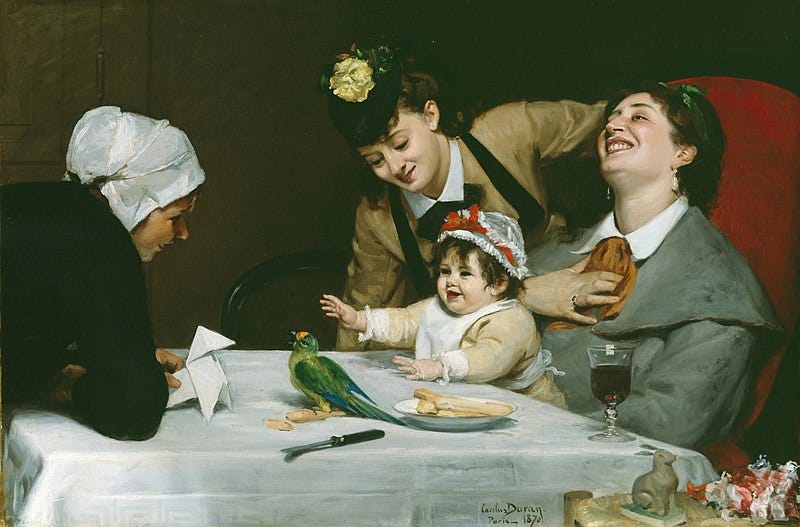
You may have heard the term ‘family meal,’ which refers to food the restaurant staff eats together outside of business hours, an off-menu concoction of leftover ingredients. Eating together puts staff on equal footing, when all are sharing the same table, seated eye to eye.

While it’s rarely as harmonious a gathering as the cheery name implies, but the point is that it happens.
The word companion replaced a word meaning ‘fellow traveler’ in the 14th century, and comes from the Latin: “someone to eat bread with.”
Contrast that with the word friend, which comes all the way from the Proto-Indo-European (that’s really old) phrase “to love.” In Old English, the word carried an extra implication of emotional attachment and fondness.
The line cooks may not have been my friends exactly, but at the table, they were my companions.
Literally my companions, if you’re using the word in the Ancient Rome sense.
And I’m wondering if this sort of companionship may help guide the current discourse on making friends, which, according to the internet, seems to be variations of:
“It’s hard to make friends as an adult, possibly because we’re all at different stages of life.”
Anecdotally I can add that whenever I’ve done any Q&A, live or online, I always get the question “How do I make friends as an adult?”
I just asked Google, and apparently all these thousands of articles just aren’t cutting it…

I never have an answer either, mainly because I had such a hard time making friends as a child/teen that adult friendships are a breeze by comparison.
And every time I blink, it seems that my 76-year-old mom has a new set of friends! The tale doesn’t fit either of us.
But I also wonder if it’s the wrong question.
I was listening to an interview recently with a powerful creative woman known for her wisdom (let’s call her Oprah) (it wasn’t Oprah) and my ears flapped with excitement when she was asked about her tips for making friends. I was sure she would have a phenomenal answer that I could steal, and then give to others in order to seem wise myself.
“Join a book club,” Oprah suggested.
And I could feel my ears droop.
REALLY? I grimaced. A book club? That’s your answer, Oprah?!
It’s a suggestion I’ve read in so many “Tips for Making Friends” lists that it’s almost a joke at this point.
Not to mention how patronizing it probably sounds to someone who has tried everything (“just put yourself out there!”).
Not to mention how I am probably the strangest possible version of myself in a book club because I’m dead-set on impressing others, so that would be a horrible place for me to make friends!
Then I realized, “How do I make friends?” just isn’t a great question, so it’s not going to get a great answer. Even from Oprah!
Perhaps we need to cool it with the friendship talk.
Perhaps we need to focus on companionship.
Going back to the etymology of the two words, “friend” involves love and emotional attachment. “Companion” is simply someone you eat with.
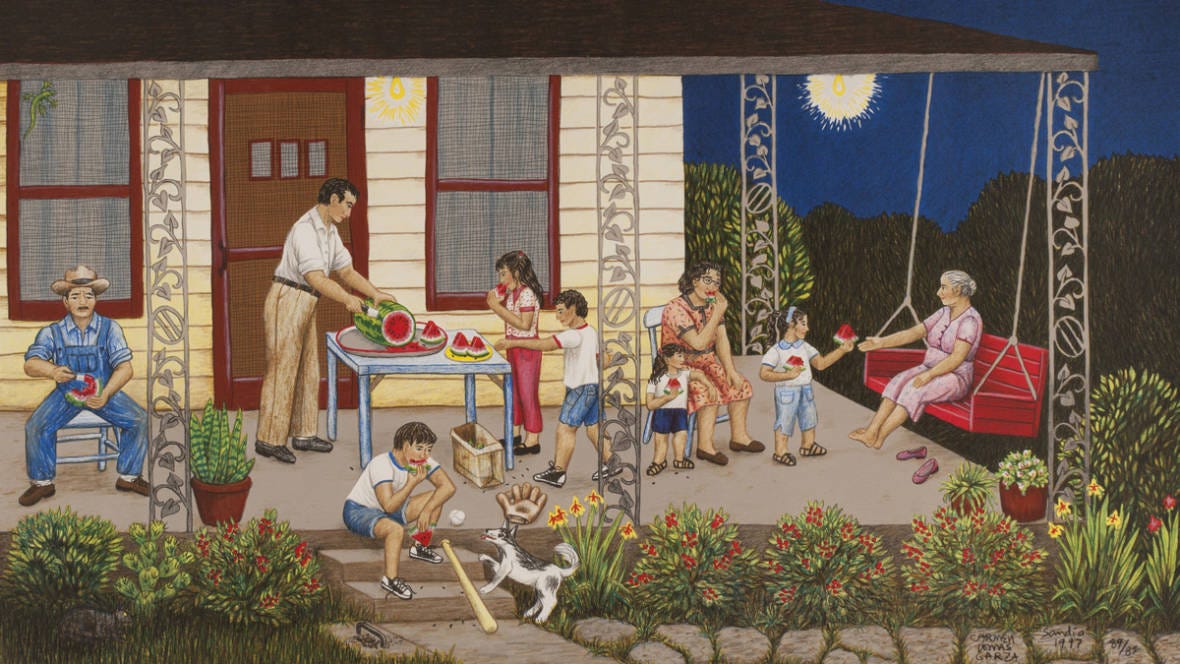
Perhaps the issue is that we’re so intent on making friends that we forget all about companions. Not necessarily the eating-with kind, but the sharing-time-with kind.
I don’t know how you make friends!
But I do know how to make a companion, because I learned at Family Table. Here are my tips:
Assume connection
It may be important to you that your friends are “in the same place of life as you are,” whatever that means for you (though I urge you to consider the marvel of intergenerational friendships).
But maybe it’s less important that your companions are.
I’m thinking of one family table that included a solemn and studious single mom, a party-going grandmother, a part-time professional polo player, and a mysterious middle-aged chef whose tattoos never betrayed any personal details. I wouldn’t call any of us “in the same place of life.”
In food service, people whose Venn diagram circles run in opposite directions at the sight of each other are often forced to work intimately together. I never expected to have much in common with my coworkers, but I always expected to find some way in.
Whether I learned it from Family Table or lots of moving around the world, I’ve come to always expect that I’ll find connection with a stranger. If I’m wrong, it’s a surprise, but connection is the default assumption.
If you assume that you and a stranger will hit it off, it’s a fun treasure hunt to see where that gemstone of connection is.
If you assume you won’t because the stranger’s hairstyle suggests they voted differently than you or because they’re wearing the t-shirt of a band you hate, then may I suggest an extra year in food service?
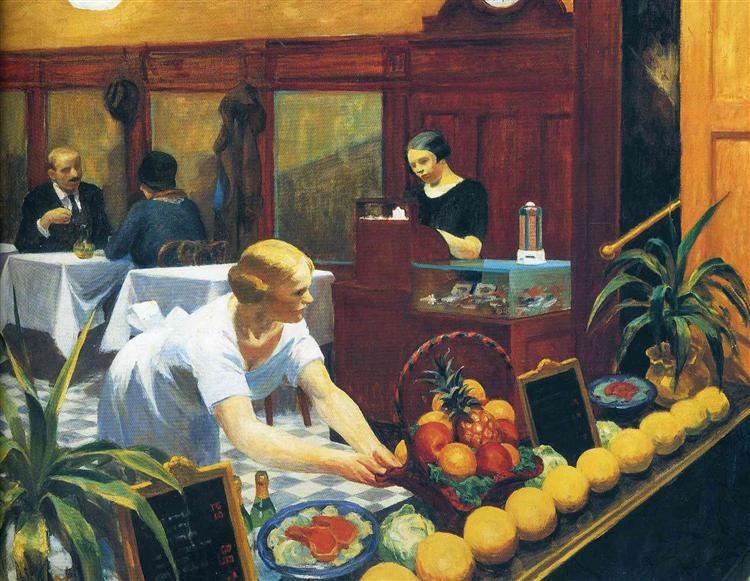
Give presence
Oddly enough, I’m less present if I’m trying to make a friend than if I’m merely companion-ing.
If I view someone as a potential companion rather than a potential friend (ie. loved one, no pressure!), I’m much less likely to direct our interaction toward my own endgame. Unconsciously, I may have a rigid idea of what would make a good friend for me.
But a companion? I’ll take anybody!
While chatting with fellow cafe coworker during a slow period, listlessly folding napkins or leaning against counters like a couple of horses in repose, I gave full attention to their back story and big dreams. With a companion, there’s no agenda, no need to fill silent space, no temptation to exaggerate or downplay.
Some of the most vivid conversations I’ve ever had took place while two were simply accompanying each other as the time went by, taking bites of the same unsold pastry and sharing words that meant nothing and everything.
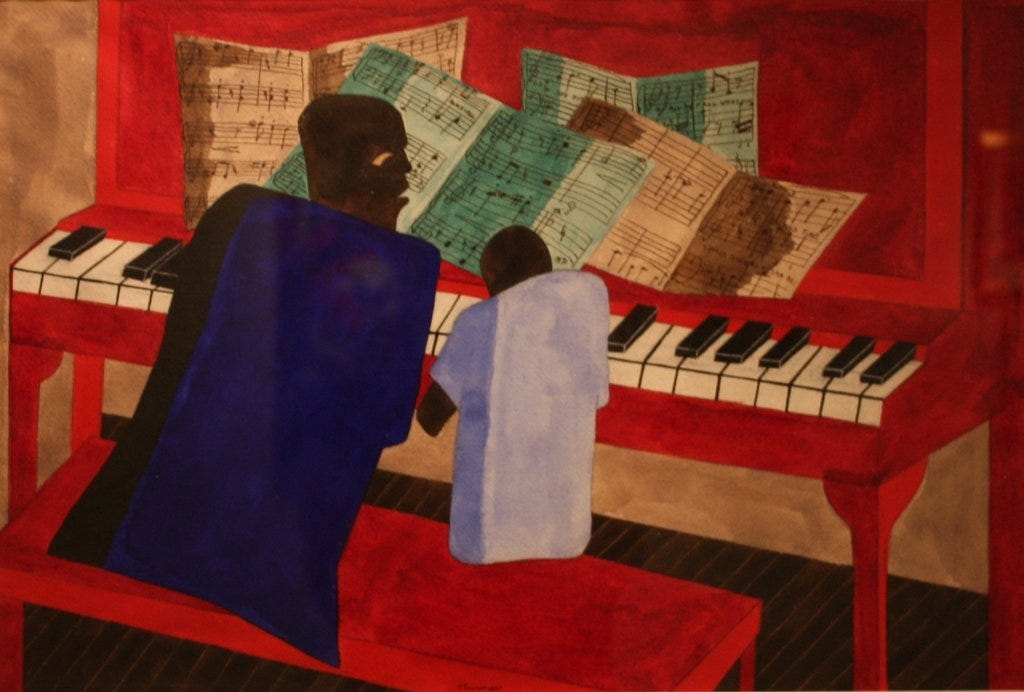
Create a container
A reason why I could be so present to my fellow server or pastry chef is because our relationship had a container: a physical place, a set amount of time, and a specific way to relate. That structure and list of tacit rules provided more leeway for intimacy, since the stakes were low.
As soon as our shift ended, so would our interaction.
It reminds me of the “Men invented [traditionally-cis-male-activity] as an excuse to [intimately connect] with other men” meme, which pokes fun at the ways that men have cleverly used their own ‘containers’ to interact with each other as women do.
This is why “meeting for coffee” can be torturous (the choosing where to sit song-and-dance alone…), whereas “attending an outdoor AcroBalance class” might be a piece of cake.

Embrace chapters
We get in our own way every time we think of anything in life as linear.
Human relationships ebb and flow just like everything—especially so, because humans are comically fickle.
Two besties who once talked on the phone every day may fall out of touch, only to reconnect as Wordle competitors on Facebook three decades later.
An acquaintance from your old frisbee team may come out of the woodwork when they heard you’re sick, and suddenly become a close confidante.
Groups of pals pair off and rearrange.
Even lifelong friendships loose their elasticity like an overstretched rubber band every once in a while.
Solid, long-term best friendship is a wonderful concept, but rare. I’ve found it much more fulfilling to collect companions over my various chapters and appreciate our high and low tides as inevitable given that we are all 60% water.
When I get caught up in linear thinking, I imagine my life as a big old book with thin pages like a great-grandparent’s Bible, and start assigning chapters every few pages with clever titles. Then I can embrace certain people in my life as companions for a chapter, rather than lamenting that they haven’t popped up on every page.

Be there, literally
I was once talking to a colleague, let’s call her Cher, who was constantly bemoaning her lack of friends.
Yet, she spent an equal amount of time complaining when she had any plans whatsoever, and often ended up canceling on any social obligation that interfered with her treasured hobby of ordering takeout and watching Bravo shows (zero judgment whatsoever on this hobby).
“Friends aren’t just going to show up at your door, Cher!” I reminded her. It was as though she wanted people to call her friends, but didn’t want to have to interact.
“You want a village, but you don’t want to be a villager!”
The idea made us both laugh, but Cher agreed.
The genius of Family Meal is that you have to be there. Whether or not you’re in the mood, you’re going to be sharing bread with these weirdos and you might as well engage with them. Over time, the consistency of companionship had no choice but to transform into a version of friendship.
In the age of online ‘friendships’ which are both extremely convenient and extremely at your leisure, IRL relationships may seem like a lot of work. They’re going to require actually being there, literally. You may find yourself en route and wishing you’d canceled, but that’s not how Cher ultimately made friends.
Companions are often more consistent than friends (I see my baristas 10x more than I see my best friends) and have something to teach us about frequent face-to-face interactions.
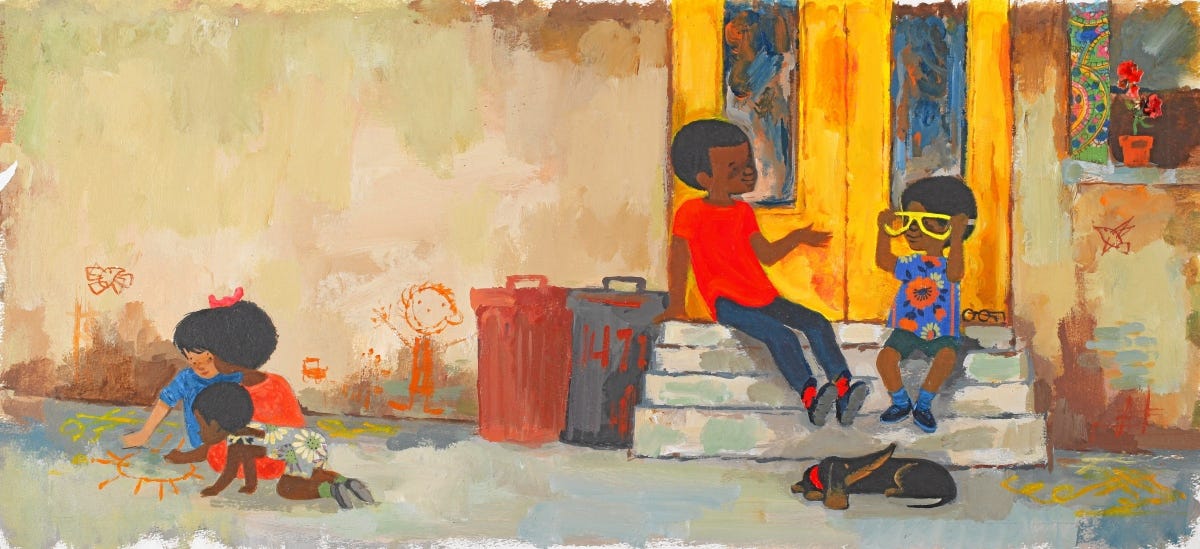
Open up
A final secret: many companions turn into friends! They key is being open to all types of companionships, and giving them your full presence.
For friendspiration, here are ways I’ve met a few of my best friends:
I worked at a boutique, she was a customer. Thirteen years older than I and thirteen times more chic, I was shocked when she one day asked me for styling advice. If it weren’t for the complexity of a strappy jumpsuit, I wouldn’t have the most essential empath in my life.
I worked at the worst job ever when I was 25, the kind of job that routinely makes you cry in the bathroom. I trauma-bonded with a couple fantastic people there, and one of them introduced me via email to her sister because we both liked talking about lipstick. Now, the sister of a coworker at the worst job is one of my longest and closest friends.
I loved his art, and asked if he wanted to meet up when I was in town. What I thought would be a one-off chat about illustration turned into one of my greatest platonic love stories.
We shared a cab from a hostel to a mall in Santiago, Chile to buy phone cards. Fortunately for our friendship, smart phones wouldn’t be invented for another two years.
Some companions-turned-friends below:

And now, some Q&As from Blueberries about adult friendship…
1. I’m very intense about friendship and have 4 really close friends, but I get frustrated when they don’t meet my needs. How can I accept people how they are and stop putting so much pressure on them?
Congratulations, you’re the ONLY PERSON ALIVE WHO WONDERS HOW TO ACCEPT PEOPLE AS THEY ARE!
Joking :)
Unless you are the Dalai Lama or Paddington Bear, I assume you struggle with accepting people how they are. It’s one of the hardest Master Classes at Earth School, and our society supports a narrative that it should come easy. Lies, all lies!
I’ll tell you one little trick that has served me very well since I started therapy many years ago. I had a good friend, let’s call her Beyoncé, and she frustrated and triggered me left and right. She was flaky, bragged about herself, had annoying habits, let me down a number of times. Of course, in contrast to perfect me!!
But deep down, I adored her, I just wanted her to be…a completely different person.
My therapist gave me this mantra for dealing with her antics: “That’s just Beyoncé being Beyoncé!”
In other words, there was little I could do to change her. If I saw her flaws as humorous, even occasionally endearing, parts of her personality, I’d be able to see the good parts much more clearly.
Beyoncé was always going to be flaky. She wasn’t going to stop bragging. I was not the person who was going to change her habits. And if I wanted to continue the friendship, I had to get over the letdowns. This was all included in the package deal of loving Beyoncé, and she had a no-returns policy.
“That’s just Beyoncé!” I’d laugh to myself when she was late for dinner. “Oh, that silly Beyoncé” I’d think during one of her bragging monologues.
It was as though I was re-learning to embrace her as a sweet but misbehaved puppy, which helped me overlook the ways she failed to completely meet my every need.
Perfect friends are not possible. Instead of wondering how to change them, perhaps try being just a tiny bit more patient, and see how they might end up surprising you.
One last point: Perhaps explore the idea that your needs can get met in a variety of ways.
For example, I’m an only child, which means I’m terrible at sharing. I hate sharing. But I insist THERE ARE OTHER WAYS TO BE GENEROUS! I’m not going to start sharing at this point in my life, but I’m willing to offer SO many other ways to lavish my friends with love.
If your friends aren’t meeting a need of yours in one way, I encourage you to get in the habit of looking for other ways that they’re showing you love.
As the wise Ole Golly said in Harriet the Spy, “Good friends are one of life’s blessings. Don’t give them up without a fight.” Or a closer look.
2. why is making friends so hard after your 30s? and it is THAT much harder when you are divorced. :(
Oh my sweet little plum. I’m so sorry. I’m so sorry it’s been so hard for you, and that this profoundly difficult life transition has made it even harder. I can feel your pain from here.
So I’m praying that this doesn’t come across as too harsh, but I want to gently invite you to begin wondering what it would be like for you to work on releasing that particular belief.
You see, I don’t think making friends is hard after your 30s. And, I made several of my best friends after they got divorced. There’s at least one example of someone for whom your belief isn’t true.
What happens when we attach ourselves to a highly specific script rather than what’s true for us is that we prevent our desires to show up in surprising ways.
If I decide that dating is hard because all men suck (common refrains in New York City!), I’m not making myself available for any other experience of this world. What a tough way to live!
When you’re in a committed relationship with a specific story and limiting belief, the unexpected can’t show up. You’re clinging to this restricting myth that isn’t even true for most people, when magic might be dying to squeeze in and blow you away.
By breaking up with that narrative and saying “I’m available for a new experience—one where I will be treasured for my past experiences by dear friends throughout the rest of my life,” then you will offer yourself to possibilities beyond your imagination.
My mom is 76 and she is constantly making new friends because she is literally open to every stranger she ever meets, whether they are a street musician or baroness. She’s been divorced and widowed, and she is over 30. :)
My mom doesn’t assign any human more or less value for their marital status, job, place in life, dietary restrictions, whatever. And she most certainly never accepts any rumors that age has anything to do with connection, which we are all naturally starved for.
I really hope you will soften the story you’re telling yourself, and start wondering how to be more open to the connections that are ready for you.

3. What do you think of the relationship advice that is highly pushed on social media? (like: remove all toxic or negative people from your life and only hang out with people who make you happy) Isn’t talking about problems (and potentially tackling them together) a big part of friendship?
Ahh, this is one of the many reasons I essentially quit Instagram. I was simply absorbing too much, and one thing I was definitely sick of absorbing was advice that I don’t agree with.
So, maybe that tells you what I think of social media advice!! But I’ll elaborate a bit here:
Overall, I think the majority of talk about “toxic people” and “boundaries” is extremely self-serving, anti-human, and just rude.
(Some of the offline advice is helpful!)
I want to be friends with people who honor the humanity in others, who seek out the richest textures of life which are thick with differences, those who value intimate conversation over selfish avoidance, those who prioritize the adventure of relationship over the ease of isolation.
Yes, Dearest Question-Asker, tackling problems together is a big part of friendship. So is grace, forgiveness, honesty, and learning to acknowledge your own faults. None of this is possible with most of the friendship advice you get from Instagram carousels.
More of my thoughts on boundaries here!
4. Do you really need a friend “group”? Always had a few friends who I love, that are scattered everywhere, but never a group. Wanting to join or make one but lost on how to. Wishing I had more day to day friends to do errands with, hang out at home, do weekend trips.
It’s tempting for me to cheerfully answer this question with a “No, of course you don’t need a friend group!” and go on about all the different forms that friendship takes.
But I understand why you would want one: Movies and TV and the Babysitters Club books make friend groups look soooo fun, and can make some of us feel like lonely losers if we don’t have one!
So in order to answer this question, I’m going to echo something that a writer once said about not having children. When a family member asked her, “Don’t you feel like you might be missing out on the life experience of having kids?”
She answered with a laugh, “I’m not going to have every life experience. I also probably won’t ever be a prima ballerina or live on a lavender farm or complete a triathlon either. And I have made peace with that!”
I think about this answer a lot when I make decisions out of FOMO—am I doing this just because I don’t want to NOT have done it??
I frequently remind myself “I am not going to have every life experience.”
While obvious, it’s actually a profound statement, Buddhist-esque in its neutrality and acceptance.
And it came up when I read your question. I, too, have longed for my own Miranda, Carrie, and Samantha (as a self-identified Charlotte), or any screen depiction of a reliable crew that may have its ups and downs but always winds up plopping down on the same couch together, week after week. Or something to that effect.
But when I really think about it, if I had one of these groups, my very close (but scattered) friendships wouldn’t be as intimate. Like all humans, I don’t have infinite social energy, so maintaining a close-knit group PLUS my existing close pals doesn’t feel manageable, alas.
That said! I don’t believe you need a group for the activity partners you’re looking for. I don’t even think you need friends per se for these day-to-day adventures.
I am a BIG proponent of very casual hangs with people who serve just one purpose in life (the errand guy!). I also love a spontaneous at-home chat, but my friends don’t live near me so I do that most often with my neighbors.
Rather than a static repertoire of friends, it may serve you to remember that none of this is set-in-stone or linear. Friend groups are organic living beings that change shape over time, as are acquaintances that can become lifelong besties.
For now, having every life experience is off the table, so I say put your energy toward individual friendships and let the friend groups live on TV.
5. Tips for getting closure after a really tough friend breakup. Idk whether to reach out or not. Thank you!
While no person is replaceable, I think the romantic aspect of a relationship can be replaced, whereas making new friends doesn’t soothe the ache of losing an old one, any more than going to the zoo won’t get your mind off a lost cat.
The part that I find hardest about missing a specific friend is the end of witnessing each other’s lives. It’s almost as though joys are sorrows aren’t fully validated until shared with loved ones, and after a friend breakup it can seem like those experiences aren’t worth as much because the go-to validator isn’t there to give them a stamp.
The loss of a friendship, then, colors (or discolors!) so many other parts of life. Pain feels more lonely and celebration feels less full. We cannot overestimate the importance of presence in a life, and when one beloved (if complicated) presence is gone for any reason, it’s excruciating.
That’s why I encourage you not to reach out, if you’re doing so for closure. If you’re seeking answers and you haven’t gotten them already, there’s a good chance you never will. And even if you somehow did, they’d most likely lead to more painful tangles.
Let yourself miss your friend without grabbing the phone. Whatever you want to say, chances are that they already know.
It will probably never be 100% okay that this person isn’t in your life. But the absence of presence will become more manageable over time, so long as you let time do its work without poking at it.
A quick lesson I learned about time, from walking with donkeys (!). A difference between horses and donkeys is that horses will do whatever you tell them, whereas donkeys are much more cautious—constantly looking out for danger on your behalf. They won’t walk into a pond just because you ask them to, as a horse would.
Time is a donkey walk. You can pull and turn it all you want, but its stubborn ways are protective and kind. It is leading you somewhere beautiful and healing, but on its own terms. A horse will go anywhere it asks; the Time Donkey goes where it knows is best for you.

6. The difference and importance of friendship vs. Community?
Both are equally important. Here’s my take on the difference:
In primates, there’s a straight-line correlation between the size of frontal lobes and the size of the group in which those primates are typically found. Humans’ frontal lobes say that we should be in groups of 150 (this is known as Dunbar’s Number if you want to read more about it).
Once you know about that magical number, you’ll see it everywhere: in the size of companies, ancient towns, and social media friends that you can reasonably keep up with.
While most primates display their connection to the community through grooming, humans don’t have a lot of time to groom each other so we do it instead through laughter, singing, dancing, language, ritual, religion, and story.
A community continually maintains itself by sharing one or all of the aforementioned activities; it’s more about the maintenance of activity and the love for shared values than the individuals in the group themselves.
In a community, the individuals change, but the values don’t. (Well sometimes they do, and then things get really tricky—see Fiddler on the Roof as a cautionary tale!)
While a person can comfortably belong to a community of 150, we can only be very close friends with a fraction of that—about 12 people. Friendship is much less about shared activities and even values, than fondness for each other’s individual spirit.
I believe a community is exceptionally important for normal human feelings of belonging and protection. Friendship is exceedingly important for normal human longings for connection and affection.
7. How do you make friends when you’re childfree and everyone in your age group (40+) has kids?
If everyone in your age group truly has kids, you have one of two solutions:
a) Make friends with people who aren’t in your age group
b) Make friends with people who have kids
I’m curious why children are such a barrier here. I mean, I can certainly imagine some reasons, but I’m curious about specifics.
Several of my close friends had kids when I didn’t. I loved hearing about their families, and I like to think they enjoyed hearing about my life too. Some of them I didn’t see often, and some I did. A couple of them have reliable childcare and will take any opportunity to use it, and others do not and so I’d usually go over to their homes.
It was never a big issue.
But I’m sympathetic to the plight of making friends when everyone around you seemingly has a different life setup than you do. I’m remembering a couple years in my mid-twenties when I worked retail, and it seemed like every other person around me had a fancy office job.
Not only did I make a lot less money than them, but our schedules were totally different too. I worked evenings and weekends, and there was no way I could afford the restaurants they liked or exercise classes they frequented.
It was hard! It still is hard to figure out relationships when there are different lifestyles in the mix!
But this is where making friends gets really fun, because it’s an opportunity for vulnerability—which is the biggest giantest hugest step in making a friend.
“Hey Björk, you seem chill, but I’m hesitant to ask you to hang out because I don’t know your childcare situation or schedule. Do you have time to socialize or is it just not feasible to take on a new friend these days?”
“Hi Bono, what’s up? Yeah so I really like your vibe, but I feel sort of left out when we go out with other parents. Is it cool if you and I just take a walk by ourselves sometime?”
“How’s it going Eminem? I love hearing about the baby but I’m a fabulous career woman and I could use someone to talk through work stuff. Can we switch topics?”
“Ashanti, I have to be honest. We have really different jobs, and I feel so insecure when you talk about work. I wish I didn’t feel this way, but I do. Could we maybe take a pause on it for a little while, and chat instead about Real Housewives?”
OR WHATEVER.
The point is, I really don’t think kids are a dealbreaker here, and could even lead to some real moments of honesty.
I know it’s tempting while we’re making friends to easily dehumanize people due to one identifying factor: Oh he’s married, she’s rich, they’re Swifties, he’s a dog person, they eat keto, she has an entire room devoted to her turtle collection.
But openness is truly the key to friendship (see #2) and I wouldn’t want you to close yourself off to potentially thrilling connections just because a possible friend has a fourth grader.
I loved this post on friendship, but I also wanted to say that I would love it if you offered the "LIVING ARTFULLY: Bringing creativity into everyday life" workshop online at some point! I don't live in NYC anymore, but this workshop sounds amazing!